
“The remains of the old must be decently laid away; the path of the new prepared. That is the difference between Revolution and Progress.”
Henry Ford, 1922.
-
Ford Motor Company
For this MKT 337 Marketing Research project, I have selected to provide a concept that aligns with Ford Motor Company and their innovating goals for cleaner emissions in a financially boosting market.
- The product overview is a Ford Smart Cargo Van
- A proposed electric commercial vehicle
- Featuring smart parcel lockers, adjustable cargo modules, and digital route optimization all designed for fleet management systems
Explaining The Selection
- Firstly, this company is ideal for a market research is for its leadership in commercial fleet management.
- Transit vans and Super Duty trucks are widely used for businesses, government agencies, and logistics companies
- Developed strong, lasting relationships with fleet customers that could benefit from the innovations
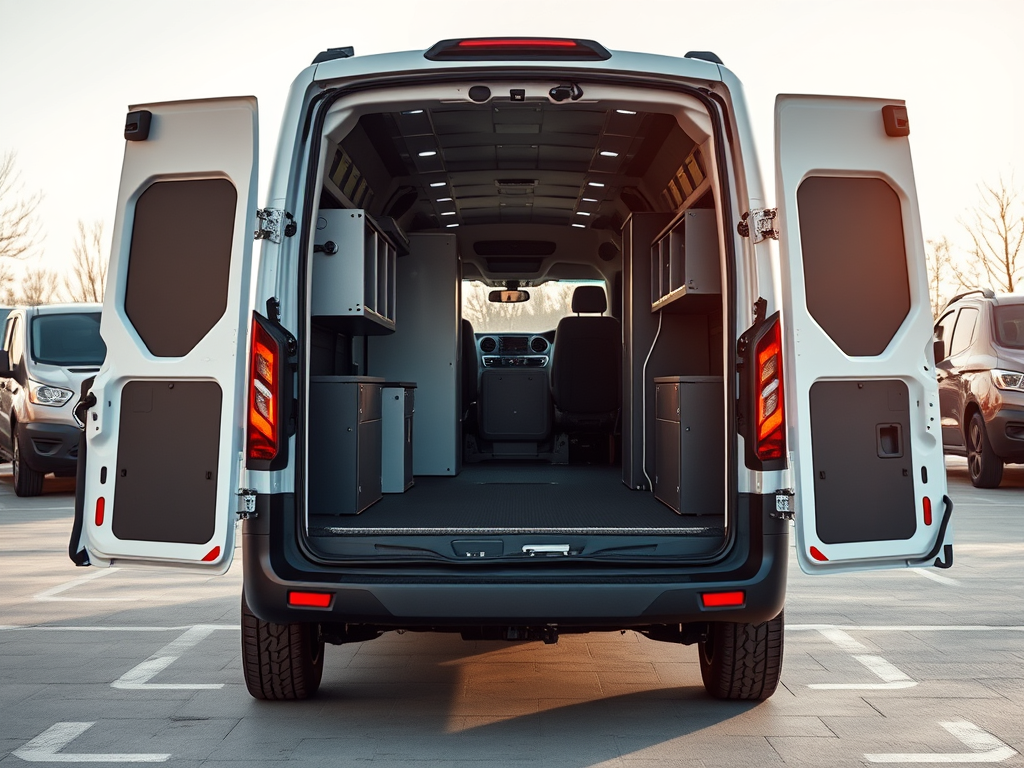
Smart Electric Cargo Van
Last Mile Delivery Operations
- The most impact in the delivery system on the consumer experience
- Business bring their values, their brand, their promise
Target Market
- Commercial Delivery Fleets
- E-commerce delivery companies
- Logistics providers
- Courier services
Amazon (generated designed vehicles)
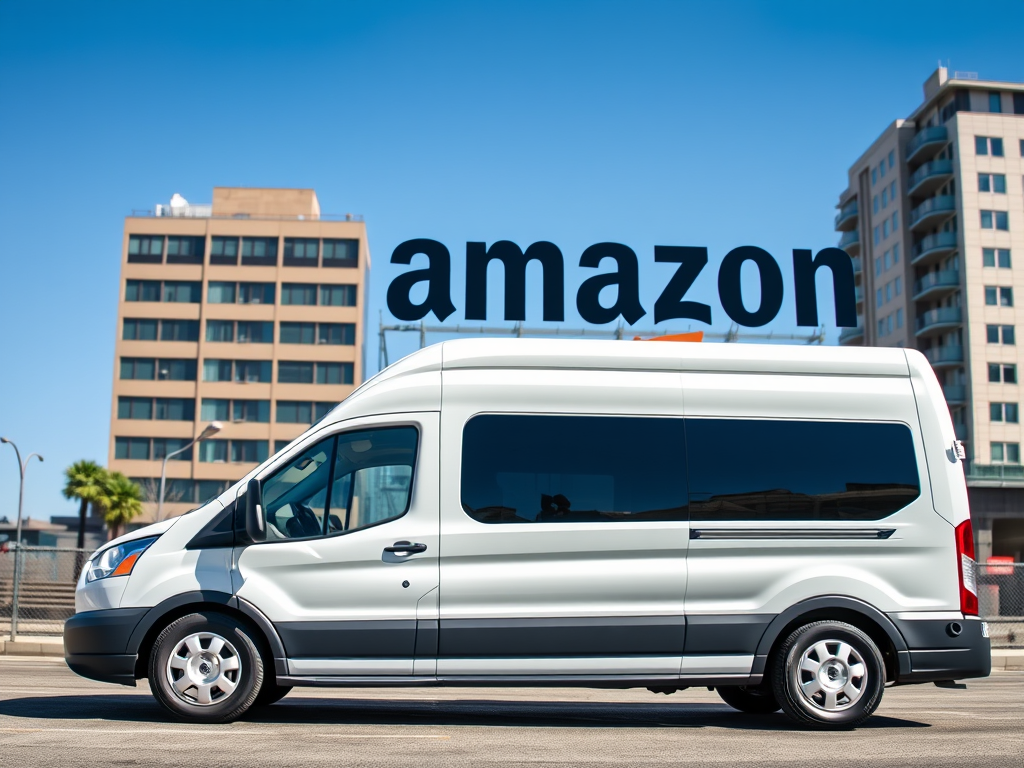
UPS (generated designed vehicles)

FedEx (generated designed vehicles)

- Secondary markets include:
- Grocery delivery companies
- Local courier services
- Retail distribution fleets
How the Smart Electric Cargo Van is a business solution
| Strengths | Weaknesses |
| Established commercial vehicle reputation leading manufacturer of fleet commercial fleet vehicles existing electric vehicle platform connected vehicle technologies and telematics platforms | high production and development costs charging availability and scalability for new EVs and operational downtime Battery range limitations Transition challenges for traditional fleet customers |
| Opportunities | Threats |
| Growing e-commerce delivery sector Sustainability initiatives and regulations Differentiation in technologies, smart parcel lockers, digital route optimization, and organization cargo units Expansion of electric fleet markets such as Amazon, UPS, FedEx | Increasing competition in electric delivery vehicles *Rivian partnering with Amazon Supply chain constraints Rapid technological change and logistics software Economic uncertainty rising interest rates, tariff wars for outsourced materials |
Current Trends of Today
Today, customers have had the privilege of receiving their packages almost instanteously. Logistics companies and retailer distributors have rapidly been growing in the e-commerce sector and developing better techniques for last-mile delivery services. Fleet operators and management teams have found ways to optimize routing systems and AI telematics for efficient and organized delivery means. According to McKinsey & Co, the demand for EVs will grow sixfold from 2021 to 2030. These demands create the adoption of electric vehicles in their fleets, while securing urban access and state or federal incentives to maintain track for sustainble goals.
When presenting a new product to a potential audience, one of the biggest concerns is “how much is it going to cost?” Using a value-based pricing strategy will provide assurance that businesses will have some type of ROI, especially as regulations continue to tighten by sustainability operations and reduction in emission (Bhattacharjee et al, 2025). Another common trend of today that revolves around ROI and impeding sufficient payback periods is the total cost of ownership for fleet operators, not just the upfront pricing of the vehicle but how it’s a business solution overall. Automotive companies are getting ahead in the game by integrating smart logistics and technology advancements. In fleets especially, route optimization and fuel efficiency are driving decision-making.
Future Industry Trends
As automotive companies expand their infrastructure by integrating AI telematics and advancements in EV adoption, the impact they have starts to break down certain market barriers. Consumerism plays a large role in the need for electric cargo vans, as the last-mile delivery system will always be adapting to the progression of the e-commerce sector. The growth in AI-driven logistics will soon impact the ecosystems and automation feature development.
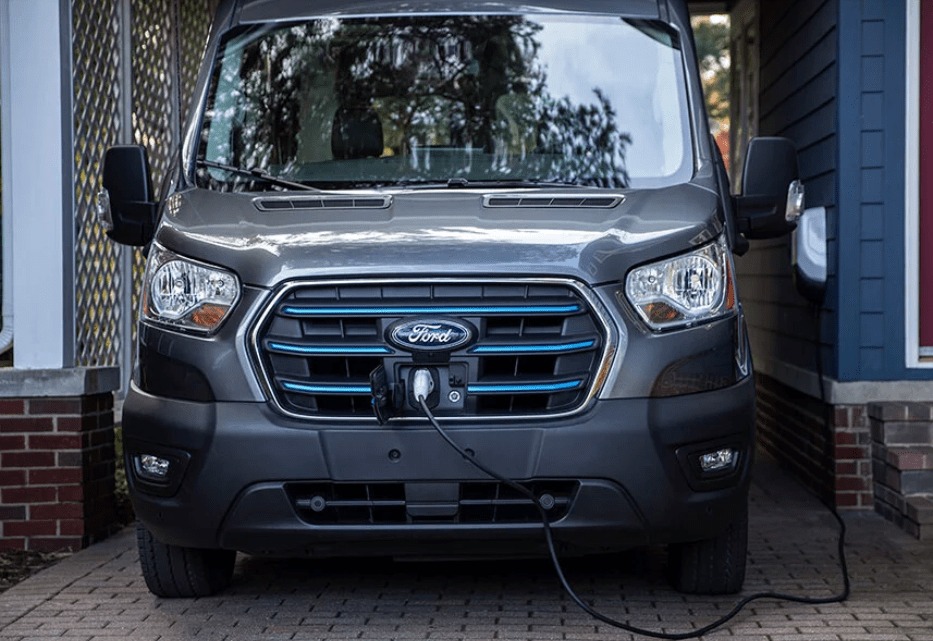
Hybrid vehicles were the bridge to full electrification (International Energy Agency, 2025). Companies expanding charging infrastructure and adopting access models, including leasing programs with low or zero upfront costs and financing partnerships enable vehicle ownership.
Implications for Ford Motor Company
| Strategic Opportunities | Market Expansion | Competitive Differentiation | Customer Needs |
| Expand beyond traditional vehicles and evolve into smart logistics solutions through the growing fleet market | Implement fleet analytics, data collection for smart cargo systems, and optimizing route tracing | Consumers want lower prices, companies that thrive for sustainability and ESG goals | |
| Strategic Risks | Limitations | Production Costs | Competition |
| Expansion of infrastructure is solely based on the ability to adopt EVs in certain regions | Advanced technology and integrating new systems can create higher costs in the beginning of transition | Companies such as Rivian, or other fleet operators, are entering the same market and working towards similar objectives | |
| Marketing Implications | Business Solution | Promoting Productivity | Operational Performance |
| Emphasizing ROI and sufficient payback period and not just an electric vehicle | Investments into infrastructure shifts and transitions | Highlighting data analytics and fleet integration for the company overall |
Aligning with legal standards
Promotional claims must adhere to the truth-in-advertising compliance drafted by the Federal Trade Commission. Sustainability benefits especially can lead to scrutiny if not thoroughly tested or quantifiable. Due to this, companies are encouraged to ensure evidence-based claims that avoid the risk of being deceptive towards their audiences. Following are strict data privacy laws and protections are enacted when companies begin to integrate advanced data analytics. Expectations such as transparency and usage must be met by the company as the smart electric cargo van provides fleet tracking and route optimization systems.
Aligning with ethical standards
- Transparency in value-based strategy that clearly communicates long-term savings vs upfront costs
- The company upholds responsibility of data usage
- Promotes brand integrity
- Greenwashing is a NO = avoids committing “eco-fraud”
- Maintains trust in consumer perspective
- Workforce considerations and ensuring that there is no replacement, only enhancement
Aligning with industry standards
| Marketing Standards for B2B | Sustainability Trends and EVs Adoption | Integrating New Tech Standards |
| ROI and performance metrics Presenting case studies of the product to match the needs of fleet buyers and management teams | ESG initiatives and zero-emissions goals | Smart logistics and data analytics Expectations for last-mile delivery systems and fleet operators |
Limitations in Research
“Common limitations associated with marketing research include sampling bias, financial constraints, time pressures, and measurement error.”
In regard to compiling data for a product such as the Smart Electric Cargo Van, there are going to be limitations in the research as any new product development would encounter. Primarily, the scope of the research can compromise the data, whether the survey sample be too small or that it’s conducted based on a region that might not fully represent the entire market. This product is being introduced in areas such as Chicago where the traffic is dense and the demand for e-commerce delivery is high. Even through secondary data collection, assumptions might not perfectly reflect the actual buyer behavior as general trends shift and evolve so often, the industry reports can only provide information as it comes to light. Another lacking scope is due to the new product itself. Since there is yet a prototype to drive pilot results or provide actual sales margins.
The market and industry are always changing, always evolving. Most industries are driven by the advancement of technology and the integration of technology, as we see with the adaptation of electric vehicles. The rate of change will vary based on region. Rural areas will less likely see the same exponential change compared to their counterparts in metropolitan and urban areas. As business cycles evolve, fleet investments depend on the interest rates and tariff wars that may cause drastic fluctuation.
Since smart cargo and tech features have yet to be tested in real operations, the value of the product has not hit solid ground. The value-based pricing strategy rests primarily on the estimations based on industry averages. There will be more data when a pilot test is ran and the data collected from the case studies, but creating assurance to procurement teams and business owners on the cost assumption drives a hard bargain. In conclusion, time is limited but manageable when introducing a new product to market, and companies must understand the constraints in their research and how to assess their options.
References to credit
- Balawardhana, Madara. (2020). Marketing and Digital Future – Ford Motor Company. ResearchGate.
- CultureShift Research. (2026). Electric cargo van market CAGR, expansion trajectory, opportunities & smart scope 2026-2033. LinkedIn.
- Ford HQ. (2025). Ford pro fact sheet: ford transit and e-transit. https://www.fromtheroad.ford.com
- Hair, J., Ortinau, D., & Harrison, D.E. (2024). Essentials of Marketing Research, 6th ed. VitalSource.
- International Energy Agency. (2025) Global EV outlook 2025: trends in electric car markets. https://www.iea.org/reports
- McLeod, Saul. (2024). Credibility in qualitative research. Simply Psychology.
- Research and Markets. (2026). Cargo Vans – global strategic business report. https://www.researchandmarkets.com/report
- Swanson, Ana. (2026). Definitely a sham: as tariffs climb, trade fraud and accounting tricks proliferate. New York Times.
- U.S Department of Energy. (n.d). Electric vehicles benefits and considerations. https://www.afdc.energy.gov/fuels/electricity-benefits

